
Take Back Control of Your Bladder

Without Surgery or Medication

A breakthrough, non-invasive treatment that strengthens your pelvic floor in just 20 minutes... while you sit fully clothed

No surgery. No downtime. Stay fully clothed. Many patients feel results in weeks. Backed by clinical research.

FDA Cleared Device

44+ Clinical Studies

Fully Clothed Treatment

20-Minute Sessions

YOU'RE NOT ALONE

Is This You?

Millions of Americans live with pelvic floor dysfunction. If any of these

sound familiar, the Gazelle was made for you.

  • Leak when you laugh, cough, or exercise?

  • Constantly scanning for the nearest bathroom?

  • Feel embarrassed or anxious about accidents?

  • Noticed changes after childbirth or aging?

  • Avoided activities you used to enjoy?

  • Felt like your body just isn't the same anymore?

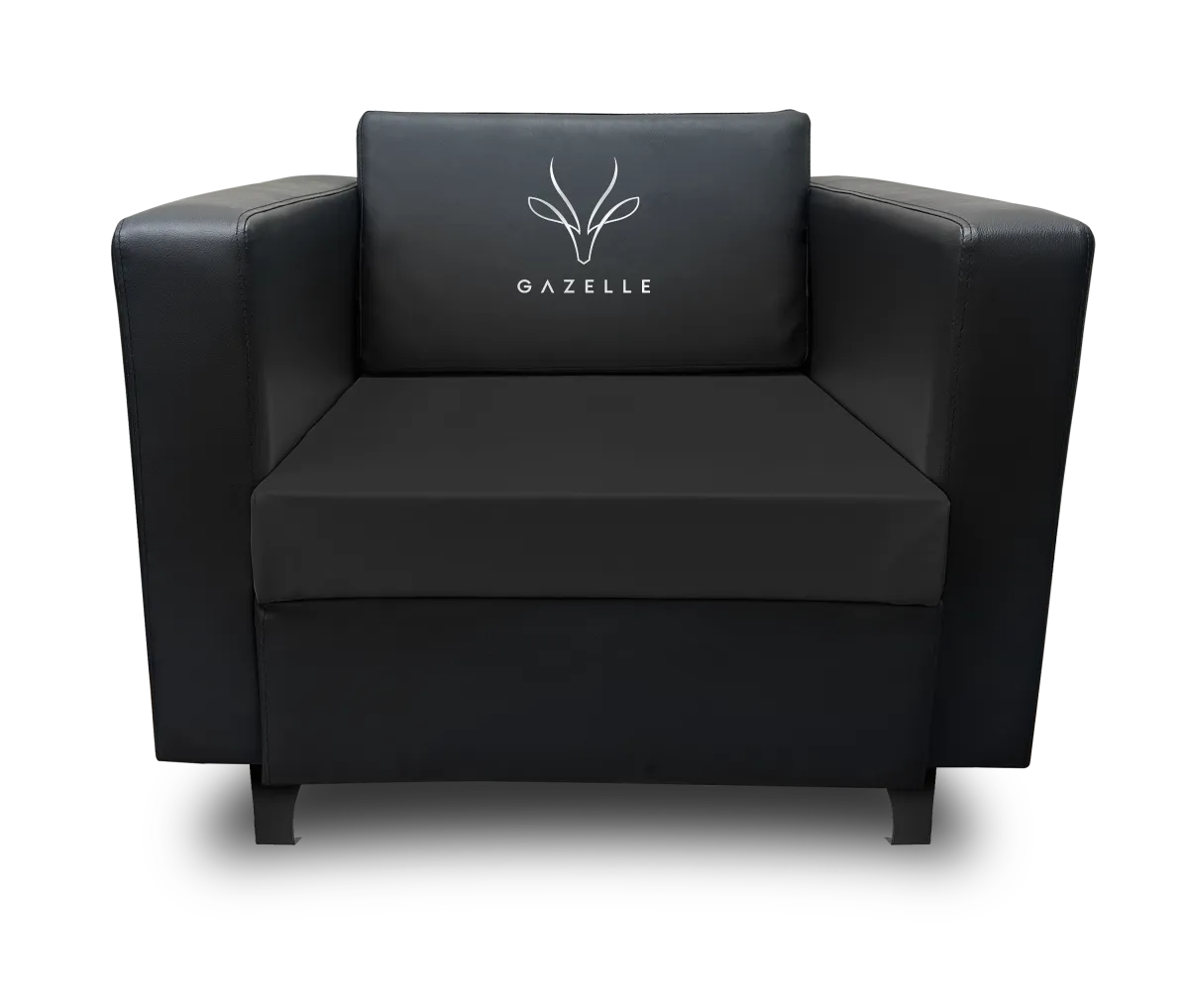
Gazelle ™ is a non-surgical, non-invasive, FDA Cleared device to treat urinary incontinence in women.

Conditions we treat

FDA Cleared | Non-surgical | Non-invasive | Done WITH your clothes on

FDA-Cleared for Urinary Incontinence in Women:

  • Stress Incontinence

  • Urge Incontinence

  • Mixed Incontinence

  • Overactive Bladder (with urge incontinence)

  • Bladder Leakage

How Gazelle Helps:

  • Neuromuscular Re-Education

  • Pelvic Floor Rehabilitation

Listen to Patient's Results

How Gazelle™ Compares

When evaluating pelvic floor treatment options, here’s how Gazelle stacks up.

Feature
Gazelle™
Kegel Exercises
Surgery
Ease of Use
✓ Effortless — automatic
Hard to do correctly
Invasive procedure
Depth of Muscle Activation
✓ Up to 4″ deep
Surface-level only
Depends on procedure
Consistency of Results
✓ Clinically controlled
User-dependent
One-time only
Recovery Time
✓ None — resume immediately
None
Weeks to months
Invasiveness
✓ Fully clothed, non-invasive
None
Highly invasive
Clinical Backing
✓ 44+ studies, FDA cleared
Limited evidence
Yes, with risks
Pain / Discomfort
✓ Typically pain-free
None
Significant
Long-Term Results
✓ Long-term results reported (75% at 14 months*)
Inconsistent
Variable

* In a randomized, sham-controlled trial of a chair-based magnetic stimulation device (not Gazelle) in 120 women with stress urinary incontinence, 75% of women given 32 active sessions were still treatment responders at 14 months (Lim et al., Journal of Urology, 2016). Individual results vary.

Hear From Our Satisfied Clients

The Gazelle™ is transforming pelvic floor therapy for patients and providers alike.

"I had increasing trouble with incontinence, even when walking. Carrying even light weights would cause a flow. After just two treatments, I noticed significant improvement. Over the course of treatment, the vast improvement was a great encouragement."

Emily T.

"No more leaking while walking. If I have emptied my bladder recently, I can even carry weight without leaking."

Betty W.

AS SEEN ON

LogoLogoLogoLogoLogoLogoLogoLogoLogoLogoLogoLogoLogoLogoLogoLogoLogoLogoLogoLogoLogoLogoLogoLogoLogoLogoLogoLogoLogoLogoLogoLogoLogoLogoLogoLogo

The Gazelle™ Difference

Bio-electric magnet

It strengthens and retrains the weak pelvic floor muscles that cause incontinence. The muscle contraction happens automatically — you don't have to think about it or do anything. It strengthens nerve pathways between your brain and those muscles, teaching your body to regain control. That's why patients can get real, long-term relief from incontinence.

Stimulates tissue up to 4 inches in deep with your clothes on. 44 pelvic floor clinical studies have been performed on the science and designated treatment protocols.

Who Can Benefit

  • Women with urinary urgency or leakage

  • Postpartum mothers and menopausal women with bladder leakage

  • Women with bladder leakage after pelvic surgery

  • Women seeking a non-invasive pelvic strengthening solution for bladder leakage

The Science Behind Pelvic Health Success.

Clinical Evidence

The Science Behind
Pelvic Health Success

Gazelle™ is built on ExMI (Extracorporeal Magnetic Innervation) technology — backed by over 25 years of peer-reviewed research across 46 published studies in urology, urogynecology, and pelvic rehabilitation.

46
Published clinical studies on ExMI technology
25+
Years of peer-reviewed research (1996–present)
FDA
Cleared — pelvic rehabilitation for urinary incontinence
Peer-Reviewed RCT
2020
PFMT vs ExMI in Stress Urinary Incontinence — Randomized Controlled Trial
Weber-Rajek M et al. — Biomed Res Int.
Head-to-head RCT comparing pelvic floor muscle training vs ExMI. Both groups showed significant improvement in continence and quality-of-life measures, supporting ExMI as an effective conservative treatment.
Peer-Reviewed RCT
2002
Magnetic Stimulation of the Sacral Roots for Urinary Frequency & Urge Incontinence
Fujishiro T et al. — J Urol. 168(3):1036–1039
Placebo-controlled trial showing statistically significant symptom improvement in active treatment vs sham. Included objective urodynamic measurements confirming neuromodulatory suppression of detrusor overactivity.
Peer-Reviewed RCT
2000
Placebo-Controlled Trial: Sacral Magnetic Stimulation for Stress Urinary Incontinence
Fujishiro T et al. — Urology
Randomized patients to active vs sham stimulation. Active treatment group demonstrated greater symptomatic improvement compared to placebo, strengthening clinical evidence for ExMI as a neuromodulatory therapy.
Peer-Reviewed
1999
Extracorporeal Magnetic Therapy in a Seated Configuration for Stress Urinary Incontinence
Galloway NTM et al. — Urology
Prospective study of seated ExMI targeting pelvic floor musculature. Demonstrated improvement in stress urinary incontinence symptoms and functional measures — one of the earliest validations of chair-based ExMI.
Peer-Reviewed
2000
Comparative Trial: Magnetic vs Electrical Stimulation for Detrusor Overactivity
Yamanishi T et al. — Journal of Urology
Direct comparison of magnetic vs electrical stimulation. Magnetic stimulation effectively inhibited involuntary bladder contractions and was better tolerated — proving ExMI offers benefit comparable to electrical modalities while remaining fully non-invasive.
Peer-Reviewed
2000
Treatment of Female Urinary Incontinence Using ExMI in a Geriatric Population
Carlan SJ, Ouslander JG et al. — J Am Geriatrics Society
Meaningful reduction in incontinence episodes with favorable tolerability in older female patients. Provides indexed clinical evidence supporting ExMI as a non-invasive therapeutic option across age groups.
Peer-Reviewed
2001
Electromagnetic Pelvic Floor Stimulation for Urinary Incontinence & Bladder Disease
Goldberg RP & Sand PK — Int Urogynecology Journal 12:401–404
Comprehensive peer-reviewed review covering mechanism, clinical outcomes, and patient selection. Improvements in both stress and urgency incontinence confirmed, reinforcing the physiologic basis of magnetic stimulation.
Peer-Reviewed
1997
Acute Effects of Magnetic Stimulation in Patients with Detrusor Instability
McFarlane JP et al. — BJU International
Demonstrated immediate neuromodulatory suppression of bladder instability during magnetic stimulation sessions. Supports the concept that ExMI modulates sacral neural pathways involved in urgency and overactivity.
RCT Men’s Health
2001
Prospective Randomized Double-Blinded Study of Electromagnetic Therapy in Chronic Pelvic Pain in Men
Patel A et al. — EAU / IBS
Randomized, placebo-controlled, double-blinded study in men with chronic pelvic pain. Symptomatic improvement reported in the treatment group, expanding evidence for ExMI beyond urinary incontinence into male pelvic disorders.
RCT Double-Blind
2002
Magnetic Therapy in Women with Urinary Incontinence — Randomized Double-Blind Study
Vauhnik R & But I — ICS 2002
Double-blind placebo-controlled study showing statistically significant improvement in pelvic floor muscle strength in the active magnetic therapy group compared to placebo.
Peer-Reviewed
2004
Functional Magnetic Stimulation for Urinary Incontinence in Women
Chandi D & Venema PL — BJU International
Prospective study (n=24) evaluating chair-based functional magnetic stimulation. Reported symptomatic improvement and strong patient tolerability across treatment sessions, validating the chair-based ExMI delivery model.
Men’s Health Post-Surgical
2001
Multi-Center Study of ExMI for Urinary Incontinence Following Radical Prostatectomy
Nehra A et al. — EAU 2001
Randomized cross-over design (interim n=22) evaluating ExMI for post-prostatectomy incontinence. Demonstrated early symptom reduction and feasibility in a surgically treated population — supporting ExMI for post-surgical rehabilitation.

46 Studies. 25+ Years. One Clear Conclusion.

The evidence base for ExMI technology is one of the most robust in non-invasive pelvic floor rehabilitation. From randomized controlled trials to long-term outcome studies, the research consistently shows significant, lasting improvement in bladder control, pelvic strength, and quality of life.

Are you a patient looking for incontinence treatment? Please enter your information below, so that you can find a Gazelle Provider near you!

Address

1172 Brownell Street, Clearwater FL 33756

(727) 618-2887

Privacy Policy | Term & Condition | FAQ

Copyright © 2026 Bedrock Bioscience . All rights reserved